

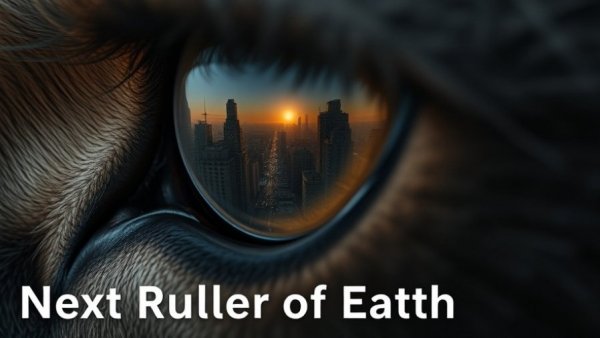
The Future Without Humans: A New Evolutionary Playground
What if humanity vanished overnight? While the immediate aftermath may see cities still bustling with activity, the intricate balance maintained by our presence begins to unravel swiftly. In merely 48 hours, power grids falter, plunging the world into darkness as automated systems fail without human intervention.
In 'Here's What Would Happen If All Humans Suddenly Disappeared', the discussion dives into the intriguing implications of humanity's abrupt absence, sparking a deeper analysis of evolutionary prospects for Earth.
The Fate of Domesticated Animals
Imagine the nearly 1.5 billion cattle, a billion sheep, and 24 billion chickens depending entirely on human care, suddenly abandoned. Domesticated animals like these are products of thousands of years of human influence and selective breeding. Without us, many will perish within weeks due to their inability to adapt to a world that no longer caters to their needs.
The Resilience of Nature: Rats During a Crisis
Interestingly, some of the highest beneficiaries of our absence would be the very creatures we often dismiss: rats. Currently around 2 billion strong, these creatures thrive on human refuse. In cities turned into food warehouses, rat populations may explode, but as their environment begins to degrade, a collapse will eventually occur, giving rise to a natural selection process that may lead to unforeseen adaptations.
Intelligence in Our Absence: Who Will Evolve?
As evolutionary biologists have pondered, in the absence of humans, who will take our place in the intellectual hierarchy? Three candidates stand out: crows, octopuses, and elephants. Each has already shown remarkable intelligence but faces distinct challenges without human constraints. This leads to speculation on whether a new breed of intelligent creatures could emerge over millions of years, ultimately reshaping our understanding of life on Earth.
Converging Pathways: The Evolution of Intelligence
Crucially, evolution has a way of converging towards similar solutions given the right circumstances. As noted by evolutionary biologist Simon Conway Morris, various species have reached intelligence independently under parallel environmental pressures. Thus, configurations of intelligence may manifest in various forms even in a post-human world.
As we explore these possibilities, one thing becomes clear: the impact of our disappearance would reverberate throughout ecological systems, paving the way for new forms of life and intelligence to evolve. This reflection on the potential futures devoid of humanity invites us to consider our roles in the intricate tapestry of life.




Write A Comment