

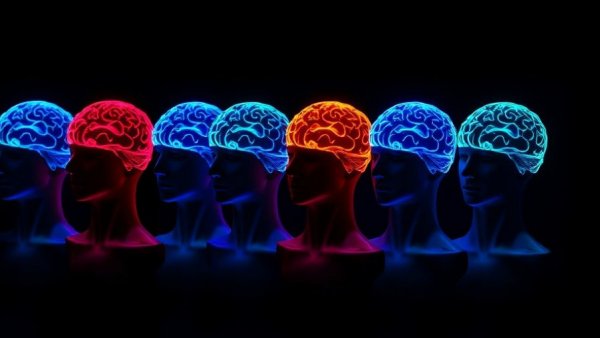
A Historical Leap: The Birth of Anesthesia and Consciousness
In 1842, Crawford Long, a dentist in Georgia, stumbled upon a groundbreaking discovery that would change the landscape of medicine forever. At a time when painful tooth extractions were the norm, he recognized the potential of ether, a substance popular in the 'ether frolics' entertainment of the South. By applying ether to a patient's face, he successfully performed a tooth extraction without subjecting them to pain—a significant leap in recognizing consciousness as something that can be turned off. For the first time, a threshold was crossed, revealing that consciousness isn’t merely an outcome of physical brain activity but something more complex.
In 'The 7 Levels of Consciousness | FULL DOCUMENTARY', the exploration of consciousness raises critical insights that encourage us to examine our understanding of awareness and being.
Understanding Consciousness: Not Just Brain Activity
This pivotal moment in medical history opens the floodgates to inquiries about consciousness itself. Neuroscientists have since realized that thought processes emerge from the coordination of various brain regions, and under certain conditions, this coordination breaks down entirely. Interestingly, about 1 in every 1,000 people experiences 'anesthesia awareness,' where they retain consciousness while being fully paralyzed, generating profound ethical questions and highlighting our limited understanding of conscious experience.
Consciousness Levels: A Ladder of Awareness
The documentary "The 7 Levels of Consciousness" presents a fascinating exploration of consciousness through examples stretching from simple creatures like crabs to our own brain functions. At the core of this exploration is the differentiation between mere awareness of the environment and self-awareness, a concept only adopted by select species, including humans. This reflection leads to a more sophisticated level: metacognition, the ability to think about our own thoughts. This progression up the 'ladder of consciousness' culminates in the realization that our perceptions can indeed shape our reality.
Future Implications: Advancements in AI and Consciousness
As society advances, challenging discussions arise about whether machines can achieve consciousness akin to humans. Can artificial intelligence cross the threshold into genuine awareness, or is it merely simulating behaviors? With the emergence of AI and machine learning, humanity stands at a crossroads. Understanding our consciousness potentially propels us into a future where we may not only develop sophisticated machines but also enrich our comprehension of existence itself.
In exploring topics surrounding consciousness, the stories of both humans and animals move beyond mere science—they plunge into the philosophical and existential inquiries that bind our understanding of reality. As we grapple with these profound questions, the documentary serves as both a historical marker and a catalyst for contemporary thought. Indeed, the journey of consciousness is both a scientific quest and a personal exploration of our place in the universe.





Write A Comment